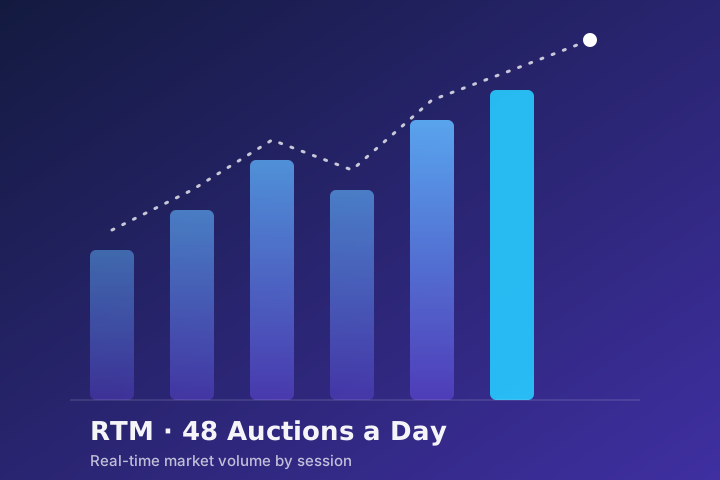
RTM in Plain Language: Making Sense of 48 Auctions a Day
- inspiri_admin
- Nov 11, 2020
- No Comments
The Real-Time Market cleared its first block in June 2020. Here is how the half-hourly auction cycle works, why it rewards fast forecasting, and what foreRTM delivers 25 minutes before each gate closure.
The Real-Time Market (RTM) went live on 1st June 2020 and restructured intraday power trading in India into forty-eight half-hourly auction sessions. Delivery for each session starts one hour after gate closure, which makes RTM the fastest-acting liquid market available to a scheduler.
The auction cycle, minute by minute
Participants submit bids for each half-hour session ahead of gate closure. The exchange matches aggregated supply and demand, clears the market, and publishes results — all within minutes. For the scheduler at an SLDC, the practical challenge is that forty-eight independent opportunities also mean forty-eight chances to misjudge the market if you are working from stale information.
- 48 auction sessions daily, one for every half-hour of delivery
- Delivery begins one hour after the bid session closes
- Prices can swing sharply between consecutive sessions
- High-solar daytime hours regularly produce the day’s lowest clearing prices
Where foreRTM fits in
Twenty-five minutes before every auction, our forecasting engine publishes predicted price and volume for the upcoming session directly to subscribers’ inboxes. The lead time is deliberate: long enough to review the projection against your current schedule and adjust the bid, short enough that the forecast still reflects near-real-time system conditions.
A humble beginning, as we called it when foreRTM launched on 14th January 2022 — but for market participants, a practical one. Used consistently, the projections support a simple discipline: treat every session as a fresh optimisation problem rather than a rolling average of yesterday.